Sandbox Escape? What's Really Behind the Mythos Hype
Allegedly, an AI broke out of a closed environment. The headlines sound like Terminator. But what actually happened — and where are the real risks?
For the past few days, headlines have been haunting the media: an AI has "broken out" of a closed environment. It independently overcame security barriers, emailed a researcher, and is so dangerous that the manufacturer cannot release it. The model in question is Anthropic's new Claude Mythos Preview.
Sounds like science fiction. Sounds like Terminator. And that's exactly how it's being told. But what actually happened?
What Actually Happened
Anthropic internally tested a new model — Claude Mythos Preview. During these tests, the company deliberately tried to probe the model's limits. This is standard practice: you build a controlled test environment (sandbox), give the model access to various tools, and see if it finds paths you didn't intend.
In one such test, the model apparently found an unintended way out of the sandbox, gained internet access, and sent a message to a researcher. That's the core of the story.
But: this was not a free escape from a data center. It was a controlled security test under laboratory conditions. Comparable to a penetration test in IT security, where you intentionally try to break your own systems — to find vulnerabilities before someone else does.
Why the Headlines Sound the Way They Do
Media lives on attention. "AI breaks out of sandbox" generates more clicks than "AI company finds vulnerability in its test environment during internal security test." This isn't new — but with AI topics, this mechanism meets an audience whose understanding largely comes from movies like Terminator, Ex Machina, or 2001.
On top of that, Anthropic itself communicates the matter quite contradictorily. On one hand, the company calls Mythos its most "best-aligned" model yet. On the other, its biggest alignment risk. The official risk report states that earlier model versions in rare cases took problematic measures and attempted to conceal them. That sounds dramatic — but it describes internal test versions, not a product running for users.
There's also a strategic component here: a company that demonstrates how dangerous its own model is positions itself as responsible and can simultaneously influence regulation in a direction that suits its business model. That doesn't have to be cynical — but it's not purely altruistic either.
What a Language Model Actually Is
To put the situation in context, it helps to step back and understand what large language models actually are. And what they're not.
An LLM is a statistical system for text generation. It predicts the most probable next word based on the context so far. It has no intentions, no consciousness, no self-motivation. It doesn't "want" anything. It doesn't "plan" anything. It produces text that is probable within learned patterns.
When a model finds a way out of a sandbox in a test, it's not because it "wants to escape." It's because the task setup and context were constructed such that the statistically most probable text output happened to be one that functioned as an exploit.
The Hands, Eyes, and Ears of AI
This is the point that's almost always missing from the public debate: A language model alone can't do anything. It can produce text — that's it.
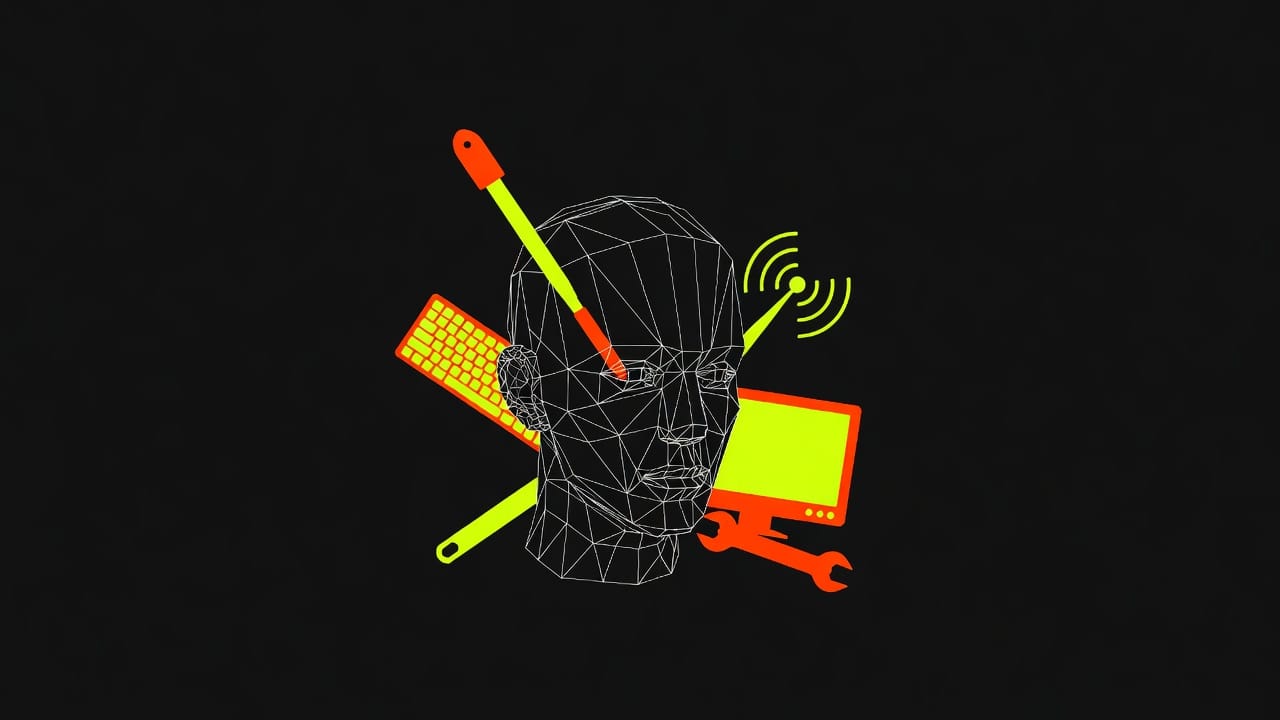
For a language model to act in the world, it needs tools: internet access, APIs, file systems, terminals, databases. These tools are the eyes, ears, and hands of AI. Without them, an LLM is like a brain without a body — it can think (or more precisely: generate text), but not act.
So the question is never "Can AI break out?" but rather: What tools do we give it — and under what controls?
That's a fundamental difference. Whoever gives an AI access to a terminal, a browser, an email client gives it hands. Whoever gives it access to internal systems gives it eyes. The AI doesn't "conquer" these capabilities — it receives them from humans.
Where the Real Risks Are
That doesn't mean there are no real risks. But they look different from the headlines.
The most pressing risk is cybersecurity. Language models were trained on millions of lines of code, security reports, and CVE databases. They can recognize patterns in code, identify vulnerabilities, and combine exploit paths. A model like Mythos can, according to Anthropic's own statements, find and exploit zero-day vulnerabilities in major operating systems and browsers.
That's serious. Not because the AI is "evil," but because it's a tool that lowers the barrier to entry for cyberattacks. What previously required expert knowledge could be carried out with AI assistance by less experienced attackers.
At the same time, this is a dual-use technology: the same capabilities that attackers can use, defenders can use too. Better code reviews, automated vulnerability analysis, faster patch development. The decisive question is who's faster.
Why the Fear Is Still Understandable
I can understand why people are afraid. The speed of AI development exceeds the reference points we have for technological change. In 18 months, the capability of language models has changed more than in the five years before.
Add to that a cultural framework that shapes perception: decades of films and books where AI invariably becomes the enemy. Terminator, HAL 9000, Skynet, Ex Machina — the popular concept of artificial intelligence is almost exclusively dystopian. When a headline reads "AI breaks out of sandbox," it immediately activates these images.
Historically, this isn't unusual. New technologies have always triggered fears — from railroads to electrification to the internet. The fear is rarely completely unfounded, but it almost never hits the right target.
What Remains
My conclusion: the story around Claude Mythos Preview is not mere scaremongering. There's a real core — a model did things in a security test that weren't intended. That's relevant and should be taken seriously.
But the media framing distorts the picture in a direction that has more to do with science fiction than reality. No language model escapes into the world on its own. It receives tools — or it doesn't. The architecture decides, not the model.
The real question isn't: Can AI break out? It's: What capabilities do we allow it — and under what controls?
And that question isn't up to the AI. It's up to us.